
You are not losing to cheaper quotes because the other contractor is better value. You are losing because your proposal gives the client no visible reason to pay more. That is a different problem - and it has a different fix.
This is really a conversation about construction arbitrage - the model where a general contractor (main contractor in the UK) coordinates the project, places the right subbies, and protects the margin through systems rather than graft. The operators running it do not compete on price. They compete on certainty of delivery. Once you understand that distinction, you stop trying to be the cheapest and start becoming someone clients pay more to get. Read the full breakdown of construction arbitrage when you have a moment.
The real reason you lost
When a client gets three quotes and yours is the highest, they are not asking "who is cheapest". They are asking "why should I pay more for this one". If your proposal does not answer that question, they default to price. Every time.
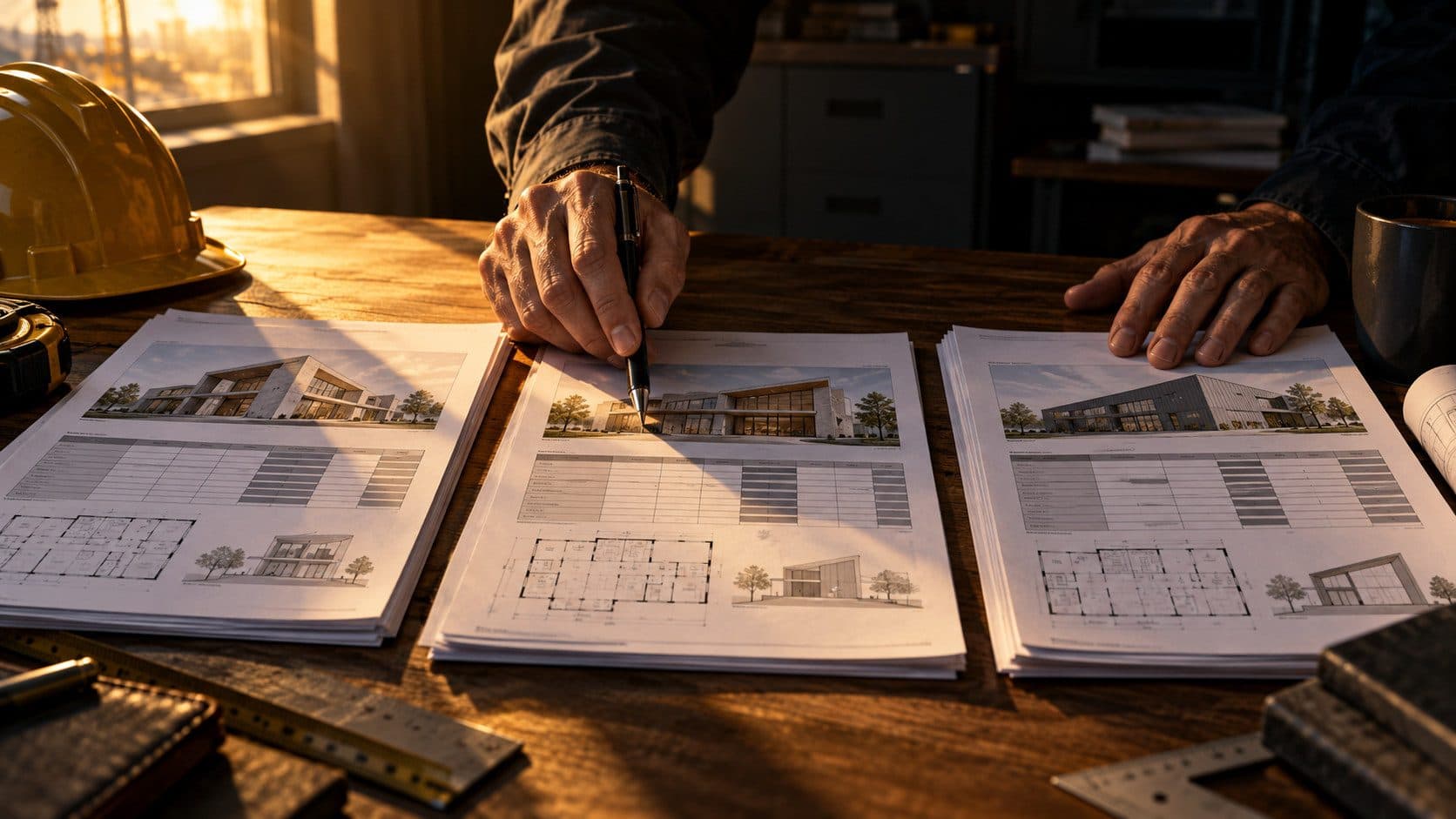
Most contractors send a quote that looks almost identical to every other quote on the market - a number, maybe a brief scope, a start date. The cheaper contractor sends the same thing at a lower number. The client cannot tell the difference, so they go with the lower number. You did not lose because their price was better. You lost because you made the comparison possible.
The fix is not to cut your margin. The fix is to make your proposal look nothing like theirs.
What is actually happening inside the client's head
Clients are not comparing numbers. They are comparing their level of anxiety about each option. A cheaper quote from an unknown contractor with no visible track record is a risk. A well-structured proposal from a contractor who showed up on time, measured properly, and sent a clean document within 24 hours feels like a safe pair of hands. The price gap gets much smaller when one option feels safe and the other feels like a gamble.
| What the client tells you | What is actually true |
|---|---|
| The other quote was cheaper | The other quote felt less risky - or you made no case for why yours was worth more |
| I went with someone local | They answered the phone, showed up faster, and felt more responsive |
| The price difference was too big | No one explained what the price difference actually represented |
| We had a tighter budget | The client had a budget and you gave them no reason to stretch it |
Most of the reasons clients give are the story they tell themselves. The real decision happened earlier - in how you showed up, how quickly you followed up, and what your proposal communicated about how you run a job.
The three signals clients read before they pick
Before a client reads the number, they have already made a gut judgement based on three things. Get these right and the price conversation is much shorter.
The cheap contractor who wins is almost never winning on the number alone. They are faster, they follow up, or their quote is clearer. None of that is hard to match. You just have to do it.
How to stop losing jobs without dropping your price
Here is what changes the outcome, in order of impact. All of it is free to implement - it is just the discipline of running a tighter operation.
- Send a written proposal, not a verbal quote or a one-line email. Cover the scope, what is excluded, the payment schedule, and the timeline. Exclusions matter as much as inclusions - they show you have thought it through.
- Include two or three photos from comparable completed jobs. Not a portfolio website - just photos in the email. Evidence of past work shifts the conversation from price to proof.
- Name a reference from a recent similar project. One name and a phone number. Most clients never call, but the fact that you offered changes the dynamic immediately.
- Follow up within 48 hours of submitting. A short call: did you get it, any questions on the scope or the timeline? That call wins more jobs than any price cut.
- When a client says you are too expensive, ask one question before you react: too expensive compared to what? Then walk them through what the price difference covers, and what happens if the cheaper contractor underdelivers.
- Anchor on total cost, not just the quote. A $6,000 gap on a $50,000 project (figures in USD - the model and the math are identical in any currency) disappears if the job overruns by four weeks or requires remediation.
See the full guide on bidding against cheaper competitors for a deeper walk-through on proposal structure and price defence.
The clients you should stop quoting for
Some clients are pure price buyers. They have a number in their head and they are going to find someone to hit it. There is no proposal quality that gets you this job at a fair margin. You can either cut your price to win it, or you can move on.
The tell is in the initial inquiry. A client who leads with budget before they have described the job, who asks you to match a price they have already been quoted, or who has gone through three contractors in two years - this is a client who buys on price. Quoting for them costs you an hour and usually ends in a lost job or a won job at the wrong margin.
The work is not the problem. The client selection is. Every hour you spend quoting a price buyer is an hour you are not spending on a client who pays what the job is worth.
Qualify before you quote. A few quick questions - what is the timeline, has this been budgeted, have they had other quotes - will tell you whether this is a client worth your time. This is a discipline that the construction arbitrage model builds in from the start: you choose the jobs, the margin, and the clients, rather than chasing every inquiry and wondering why the wins never feel good.
The long play
Contractors who stop losing on price are not smarter - they are more consistent. They send clean proposals every time. They follow up every time. They qualify every client. And over 12 months, they build a pipeline where the clients who find them come pre-qualified: they have seen the work, heard about the operation, or been referred by someone who went through the process already. Those clients do not shop on price.
It takes time to build that pipeline. But every proposal you send at the standard above is a brick in it. The ones who never build it are still chasing cheaper quotes in five years, wondering why the margin never improves. The ones who do build it start to look like operators - and operators run construction arbitrage businesses, not just site labour. The difference between the two is what this whole site is about. If you want the detail on how that model works, start here.
If you are done losing jobs on price and want to be in the room where operators talk about proposals, pricing, and margin strategy - this is where that conversation happens. Apply below.
Request entry to Contractor Club⟶Bottom line
You are not losing to cheaper quotes because the other contractor is better. You are losing because you gave the client no visible reason to pay more. Fix the proposal. Add a reference. Follow up. Qualify before you quote. Do all four and the number of jobs you lose on price will drop fast - without touching your margin. That is the move.
Frequently asked questions
Why do I keep losing construction jobs to cheaper competitors?+
Usually not because of the price gap itself. You lose when the client cannot see a difference between your quote and the cheaper one - so they default to the number. The fix is not a lower price. It is a proposal that makes the comparison impossible.
Should I lower my price to win more jobs?+
Almost never. Dropping your price trains clients to negotiate you down on every future job, signals that your original quote was padded, and destroys the margin you need to run a proper operation. Build a better proposal instead.
How do I explain my higher price when a client says another contractor is cheaper?+
Ask one question: cheaper compared to what? Then break down exactly what your price covers - scope, timeline, accountability if something goes wrong, track record. A $7,000 gap looks very different once the client knows what fills it.
Do construction clients always choose the lowest bid?+
No. Experienced buyers - developers, property managers, commercial clients - consistently choose the contractor they trust most. Price becomes the deciding factor only when every other variable looks the same. Your job is to make sure they do not.
How long should it take to send a construction quote?+
Within 48 hours of the site visit, ideally less. The contractor who arrives first in the client's inbox with a clean proposal has already set the bar. Speed signals organisation. Clients read it as a preview of how you run a site.
What is the real reason contractors lose bids to cheaper quotes?+
The proposal looks identical to the cheap one - same vague scope, same absence of references, same no follow-up - so the client has no basis to pay more. Fix the proposal, add a reference, call within 48 hours of submitting. That shift wins more jobs than a discount ever will.
The human behind The Playbook

mointhemarket Managing construction businesses across continents - with full location freedom. Running several at once. Bought and sold many more.
Go deeper
Learn the model, then get in the room
The full breakdown of construction arbitrage lives on our sister site, constructionarbitrage.com. When you want the operators who actually run it, join the Construction Arbitrage Players community.
My listening book THE EDGE is out now - 24 chapters on how the money really moves through a contracting business, made to be listened to on the drive. Free to start. See what is inside.
My book The Family Secret - how construction arbitrage really works - is coming soon.
Only Players Know
The game is real. The room is closed.
Contractor Club is a private, application-only circle of construction arbitrage operators. If you think you belong inside, apply and the circle will decide.
More from the Playbook
View all ⟶ Get Leads
The Award-Notice Play: Find Out Who Just Won Work and Get in Their Supply Chain First
A tender notice tells you a client wants a builder. An award notice tells you which builder now needs subcontractors, where, and for what. Here is the weekly system for turning that into packages.
 Team & Operations
Best Software to Run a Construction Business
Your van won't lose you a client. Bad admin will. Late quotes, missing invoices, a subcontractor who didn't get the schedule - these kill more jobs than price. Here is the software that actually fixes it.